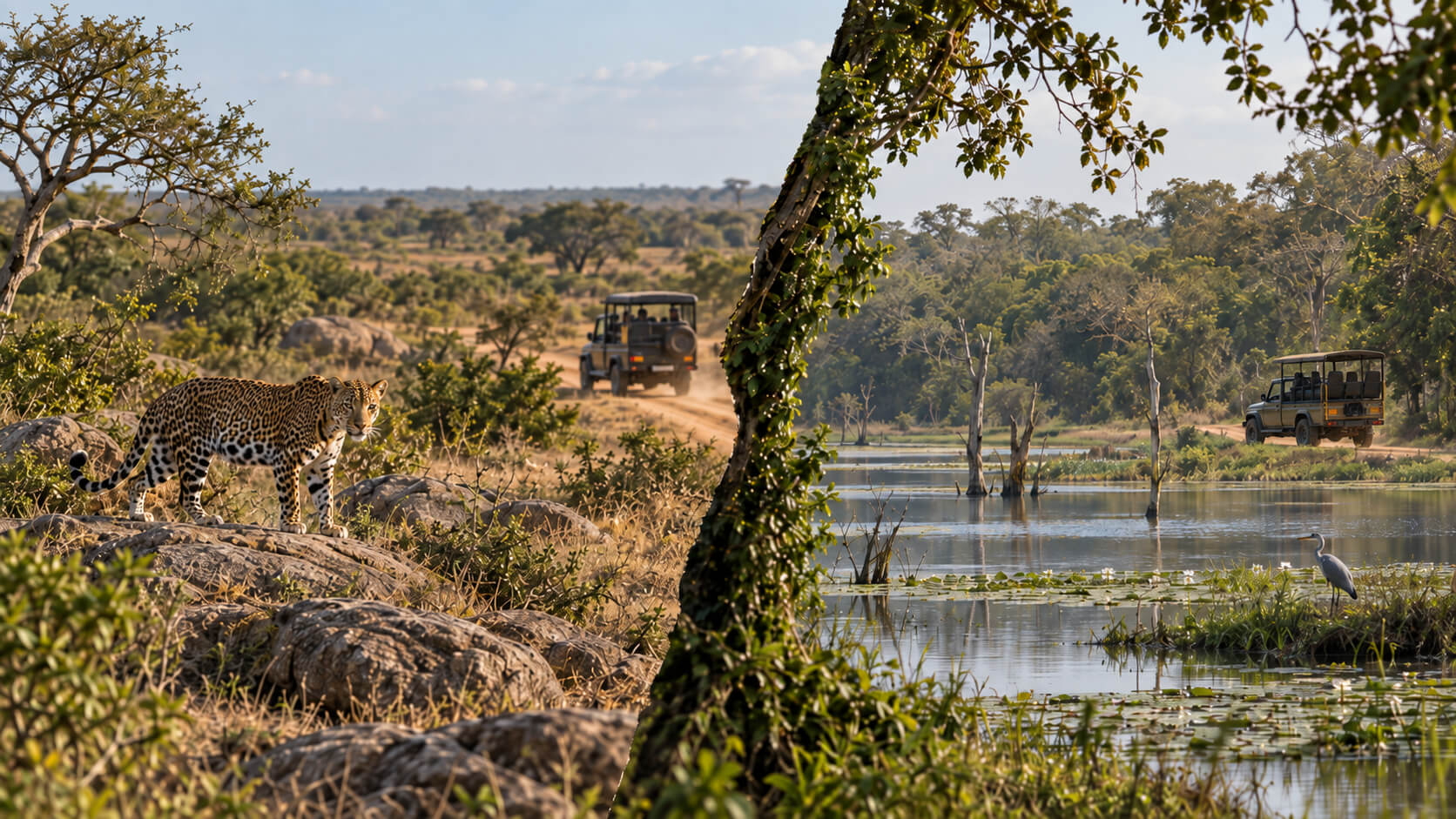
The same island, two entirely different safaris.
Yala and Wilpattu offer two very different safari experiences in Sri Lanka. Choose Yala if your priority is maximising your chances of a leopard sighting in relatively open terrain. Choose Wilpattu if you prefer a quieter, more forested safari defined by its distinctive villus, or natural lakes.
The right choice also depends on the season, how the safari fits your wider itinerary, and whether you want a focused wildlife experience or a more secluded setting. This guide compares both parks across leopard sightings, wildlife, landscape, crowds and season, so you can choose with confidence, or decide whether visiting both is worthwhile with a specialist like Sri Lanka Tailor-Made.
Key Takeaways
- Yala is renowned for having one of the world’s highest leopard densities, particularly in Block 1, with open terrain that generally makes sightings easier to spot.
- Wilpattu is Sri Lanka’s largest national park, with a distinctive villu (natural lake) landscape, denser forest cover and a generally quieter safari experience.
- Both parks are explored by 4WD jeep with a guide, the standard safari format across Sri Lanka’s national parks.
- Parts of Yala, including Blocks 1 and 2, close seasonally for park management and restoration. In 2026, they are scheduled to close from 14 September to 15 October.
- A single-park trip suits shorter itineraries, while a multi-park route works well for wildlife-focused travellers with more time.
- Neither park is universally better. The right choice depends on what you value most: leopard sightings, or a quieter, more immersive setting.
Yala vs Wilpattu Safari: Which Park Is Right for You?
| Factor | Yala | Wilpattu |
| Size | Around 979 km² | Sri Lanka’s largest national park, around 1,300 km² |
| Terrain | Open grassland, scrub and lagoons | Villus (natural lakes), grassland clearings and dense forest |
| Leopard density | Among the world’s highest recorded densities, particularly in Block 1 | A healthy population, though denser forest cover can make sightings take longer |
| Leopard visibility | Open terrain often allows sightings from a distance | Denser vegetation can make sightings more challenging, with villus and clearings providing key viewing opportunities |
| Crowd levels | Sri Lanka’s busiest safari park, particularly Block 1 in peak season | Generally quieter, particularly away from Yala’s busiest zones |
| Best season | Generally February to July, with a December to March peak, though conditions vary with rainfall | Broadly February to October, with conditions also shaped by rainfall |
| Access | 4WD jeep with a guide, the standard safari format | 4WD jeep with a guide, the standard safari format |
| Best for | First safaris and travellers prioritising leopard sightings | Travellers who prefer a quieter, more wilderness-led experience |
Should You Choose Yala or Wilpattu?
In practice, the decision usually comes down to one or two of these factors, not the whole list.
Choose Yala if:
- Leopard sightings are your top priority
- It’s your first Sri Lanka safari
- You’re pairing the safari with a south coast beach stay
- Sharing sightings with other jeeps in peak season doesn’t bother you
Choose Wilpattu if:
- You prefer a quieter, less crowded experience
- The villu landscape and forest setting appeal to you
- You’re combining the safari with a Cultural Triangle itinerary around Anuradhapura
More often than not, it is how the safari fits the rest of the itinerary, south coast or Cultural Triangle, that settles the choice before leopard density even comes into it.
Yala vs Wilpattu for a Leopard Safari: Which Has the Better Sighting Chance?
Yala, also known as Ruhuna National Park, is renowned for having one of the world’s highest densities of Sri Lankan leopards (Panthera pardus kotiya), particularly in Block 1. Its open terrain, grassland, scrub and lagoon edges, also means that when a leopard is present, it is often visible from a genuine distance, which makes for easier viewing and photography from a jeep safari adventure. Sightings in Block 1 are also a well-established part of the safari experience, though the number and quality of sightings can vary from drive to drive.
Wilpattu offers a different kind of leopard safari. Its dense vegetation, forest cover and network of villus create a more enclosed landscape than Yala, meaning spotting a leopard can take greater patience, and encounters tend to happen at closer range near the water’s edge rather than across open ground. Many experienced safari travellers find these closer, quieter encounters more rewarding precisely because they involve fewer vehicles.
Nevertheless, remember, neither park can guarantee a sighting on any given safari.
Single Park or Multi-Park Safari: Should You Visit Both?
Most Sri Lanka trips only need one safari park. Visiting both Yala and Wilpattu is worth the extra travel mainly for wildlife-focused travellers with enough time to spare.
A single park suits you if:
- You have a shorter Sri Lanka itinerary
- You’re combining the safari with a south coast beach stay
- You want a concentrated, leopard-focused safari without adding a long transfer
Visiting both parks suits you if:
- You’re a wildlife-focused traveller with more time to spare
- You want to experience the contrast between open plains and dense forest
- Your route already links Anuradhapura, near Wilpattu, with the south coast, near Yala
Because the two parks sit in different parts of the island, visiting both adds substantial road travel and at least one extra itinerary segment. This is worthwhile for dedicated wildlife travellers, but often more than most first-time visitors need.
When Is the Best Time for a Yala or Wilpattu Safari?
The best time depends on the park, weather and your wildlife priorities.
- Yala: The drier months (February to July) are generally favourable for wildlife viewing, particularly if leopard sightings are a priority. Early-morning and late-afternoon safaris can offer good opportunities for animal activity.
- Wilpattu: February and October are identified by Sri Lanka Tourism as particularly good months to visit. Its forested landscape and natural villus create a different safari experience from Yala.
Here’s a tip:
Wildlife sightings are never guaranteed. Consider seasonal conditions alongside your wider Sri Lanka itinerary and check current park access before travelling.
How Can You Plan a Yala and Wilpattu Safari Itinerary?
Combining both parks takes more planning than a single-park visit:
- Sequencing travel days and accommodation around each park’s own logistics
- Factoring in the road journey between the two parks
- Deciding how the safari fits the rest of your Sri Lanka trip, whether that’s the south coast, the Cultural Triangle, or both
Sri Lanka Tailor-Made, the bespoke travel arm of Jetwing Travels, builds wildlife itineraries that include Wilpattu, such as its Hidden Treasures & Jungle Trails route, combining a Wilpattu safari with cycling, cultural stops and Sigiriya. Its wildlife jeep safaris extend across Yala, Wilpattu, Udawalawe and Minneriya, led by experienced drivers and naturalists who tailor the safari around photography, birdwatching or general wildlife spotting.
In fact, Sri Lanka Tailor-Made has been recognised with a Best Wildlife Specialist Company nomination at the SME North West Enterprise Awards. We are a named destination expert who plans the route directly with you, rather than offering a fixed package.
How to Have a Responsible Safari in Sri Lanka
Both Yala and Wilpattu are working conservation areas, not open-access attractions, and how a safari is conducted affects the wildlife within them. A responsible safari means:
- Keeping a respectful distance from animals
- Never pressuring a driver to approach an animal too closely
- Staying inside the jeep at all times
- Choosing operators who prioritise the animal’s behaviour over a guaranteed sighting
Sri Lanka Tailor-Made’s safaris are led by experienced drivers and naturalists who track animal movements while maintaining respect for the wildlife and environment, rather than treating a safari as a race to a sighting.
Choosing Between Yala and Wilpattu? Let a Destination Expert Guide You
Whether Yala’s leopard country or Wilpattu’s quieter wilderness appeals more, the best safari fits naturally into the rest of your Sri Lanka journey.
Speak with a Sri Lanka Tailor-Made Destination Expert about your travel dates and wildlife interests, and start shaping your safari around the experience you want.
Plan Your Sri Lanka Safari with us!
Frequently Asked Questions
Which Is Better, Yala or Wilpattu, for a Safari?
Neither is universally better. Yala is generally the stronger choice if leopard sightings and relatively open terrain are the priority, while Wilpattu suits travellers who prefer a quieter, more forested wilderness experience. Your travel dates and the rest of your Sri Lanka itinerary should also be considered in the decision.
Is Yala or Wilpattu Better for Leopard Sightings?
Yala generally has the advantage for leopard sightings, thanks to its high leopard density and more open viewing conditions, particularly in Block 1. Wilpattu also supports a healthy leopard population, though its denser forest cover means sightings can take more patience. No safari can guarantee a sighting in either park.
Is a Private Jeep Better Than a Shared Jeep in Yala or Wilpattu?
A private jeep gives more control over pace, positioning and how long you wait at a sighting, which matters most for photographers. A shared jeep is more affordable but means compromising on timing with other travellers. As someone who arranges luxury Sri Lanka holidays, Sri Lanka Tailor-Made arranges private jeep safaris as standard, so pace and priorities stay with you rather than a shared group.
What Wildlife Can You See Besides Leopards in Yala and Wilpattu?
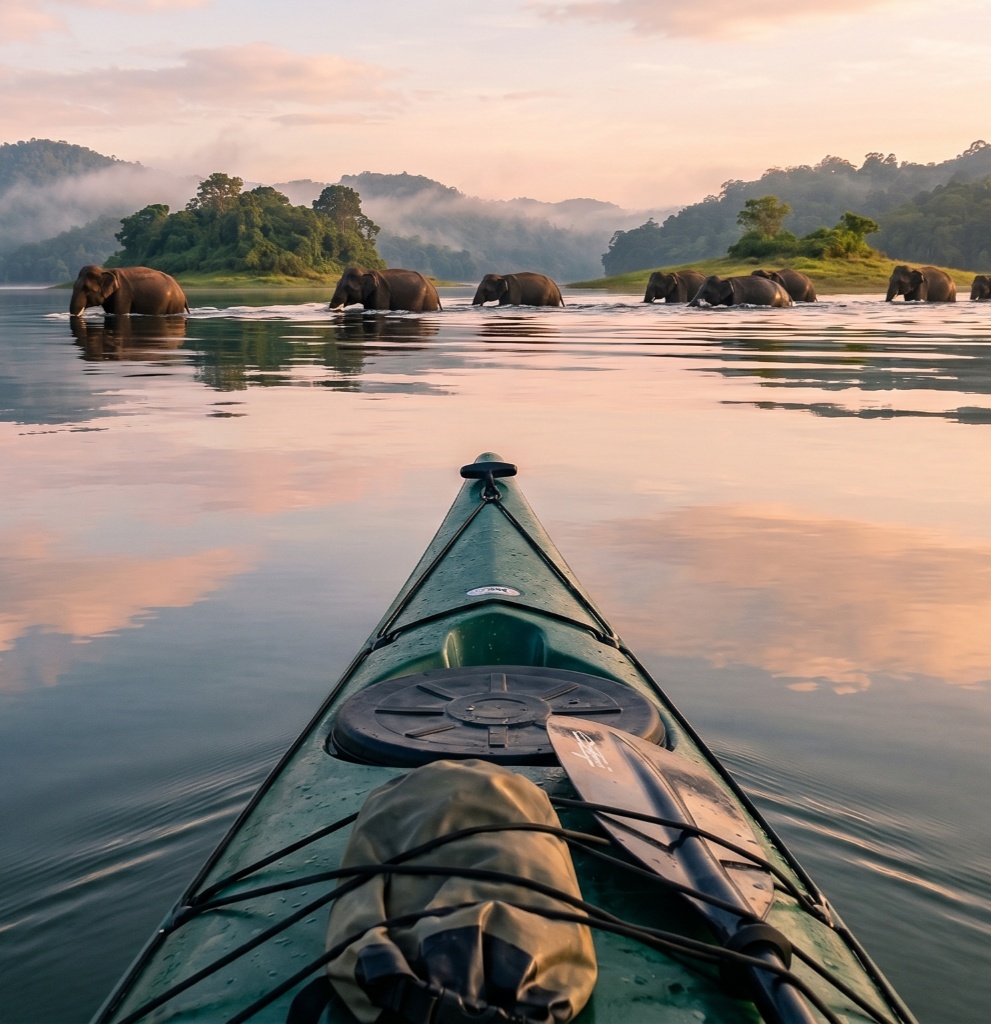
Both parks are also home to Sri Lankan elephants, sloth bears and a wide range of bird species, with Wilpattu’s villus in particular attracting larger elephant herds. For a different kind of elephant encounter elsewhere in Sri Lanka, kayaking alongside wild elephants is worth considering as part of your wider wildlife itinerary.
When Does Yala’s Block 1 Close Each Year?
Blocks 1 and 2 typically close for a period between September and October for annual park restoration, though exact dates can vary by year. Yala’s official park information confirms the 2026 closure runs from 14 September to 15 October. Safaris during this period use other blocks instead.